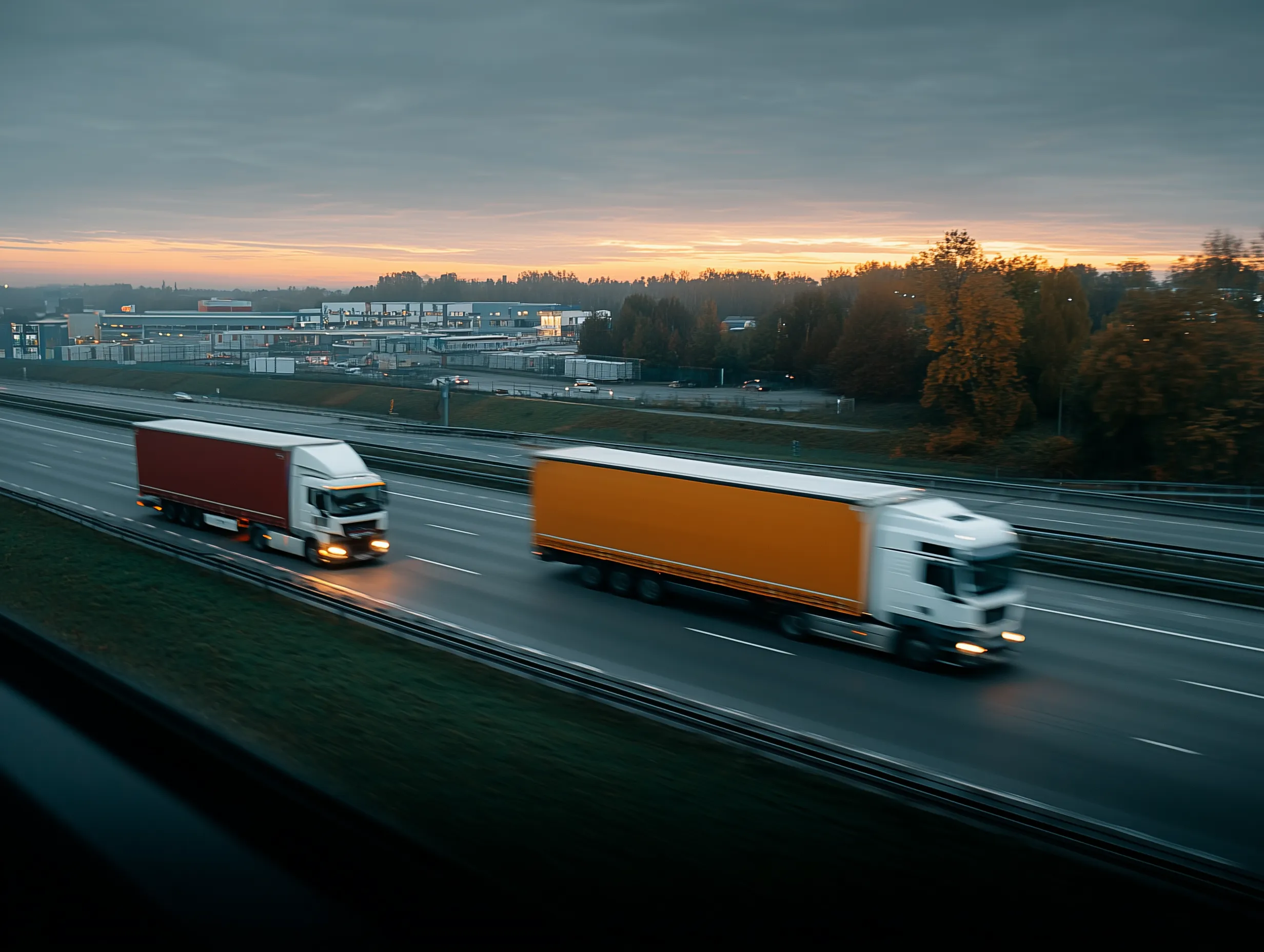
A trucking company has two constant problems: filling trucks with freight and filling seats with drivers. Both are, at their core, search problems. Shippers Google for carriers on specific lanes. Drivers Google for jobs in specific regions. Google Ads lets you show up at the exact moment someone is looking — but only if your campaigns are built for the way freight actually works.
The good news is that logistics is one of the best-converting industries in paid search, with a median conversion rate near 14 percent in 2025 benchmarks. The bad news is that most trucking companies run their ads like a local pizza shop — one broad campaign, a homepage landing page, and no lane strategy. Here's how to do it right.
Target lanes, not just "trucking."
The keyword "trucking company" is broad, expensive, and low-intent. The keywords that book loads are specific: "flatbed carrier Texas to California," "refrigerated trucking company Atlanta," "expedited freight Midwest," "dry van capacity Chicago." A shipper typing one of these has freight to move on that lane, right now.
Structure your campaigns around the lanes and equipment types you actually want to run. If you have deadhead problem on your return legs, build a campaign specifically targeting shippers on that backhaul lane. Google Ads is one of the few tools that lets you go find freight for a specific empty truck.
Send clicks to a matching quote page.
The same rule that governs all logistics PPC applies here: match the keyword to the landing page. A shipper searching "reefer capacity Atlanta" should land on a page about your reefer service out of Atlanta, with a quote request front and center — not your generic homepage or your "About Us" story.
Freight keywords aren't cheap; competitive terms can run $20 or more per click. You cannot afford to waste that click on a page that makes the shipper hunt for how to reach you. Above-the-fold quote form, matching headline, phone number visible. That's the difference between a booked load and a wasted dollar.
Speed wins the load.
When a shipper is searching for capacity, they need it now, and they're contacting several carriers at once. The one who responds first often wins the load. Set up instant notifications on your quote forms and, where possible, automated confirmations so no lead sits unanswered. In 2026, the carriers winning the most freight from search are the ones responding in seconds, not hours.
A shipper searching for capacity has a truck to fill today. The carrier who calls back first usually gets the load — speed is a bigger advantage than a lower rate.
Don't forget driver recruiting.
Google Ads isn't only for booking freight. Driver recruitment is its own high-value campaign. Terms like "CDL driver jobs near me" or "OTR trucking jobs [region]" reach drivers actively looking to switch, and a dedicated recruiting landing page with a simple application form converts far better than pointing them to a generic careers page.
Keep freight and recruiting in separate campaigns with separate budgets and landing pages. They target different people with different intent, and mixing them muddies your data and wastes spend. Run them right, and Google Ads becomes a lever for both sides of your business — more loads and more drivers. If you want it managed end to end, see our Google and social ads service.